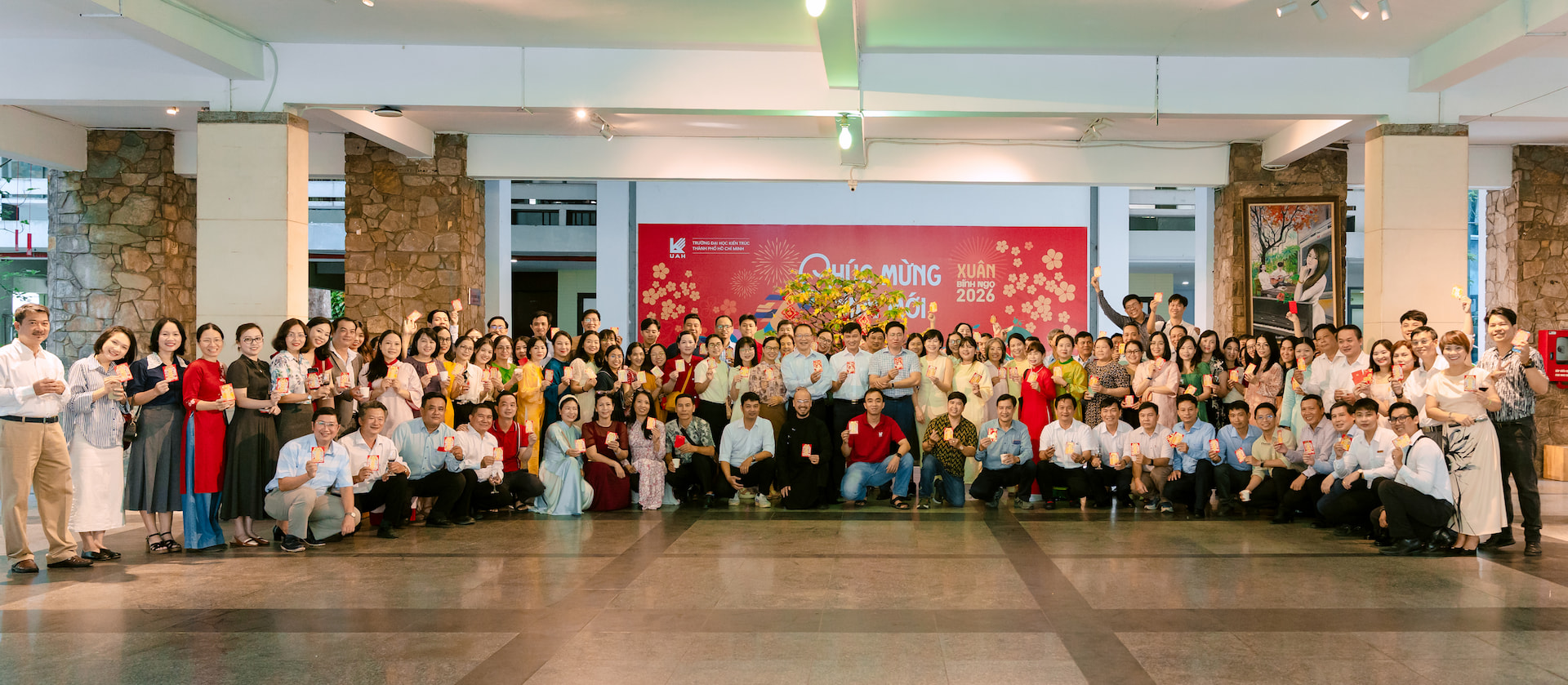
Chúc mừng năm Bính Ngọ 2026

Chúc mừng năm Bính Ngọ 2026

Institutional History

The event of the Indochina School of Fine Arts (1924) establishing the Department of Architecture, which began training architects in 1926, marks the 100th anniversary of architectural education in Vietnam this year (1926–2026).

  • 50 năm

    HISTORY OF ESTABLISHMENT AND DEVELOPMENT

    UNIVERSITY OF ARCHITECTURE HO CHI MINH CITY


    The establishment of the Architecture Section within the Indochina School of Fine Arts (1924), which initiated the training of architects in 1926, marks the 100th anniversary of architectural education in Vietnam (1926-2026) this year. Throughout the many ups and downs and historical fluctuations, based on preserved documents, it is proven that the University of Architecture Ho Chi Minh City today maintains a continuous succession of architectural training activities originating from the Architecture Department of the Indochina College of Fine Arts.

  • Tracing our roots - the responsibility of today's generation

    Tracing our roots - the responsibility of today's generation

    The Indochina School of Fine Arts was established in 1924 in Hanoi, by a Decree signed by the Governor-General of Indochina on October 22, 1924. The painter Victor Tardieu was the founder; he passed away in 1937 in Hanoi. On October 1, 1926, the Indochina School of Fine Arts established the Architecture Section (some documents refer to it as the Department of Architecture). After five years of training, the first class of architects graduated.

    The Indochina School of Fine Arts was established in 1924 in Hanoi, by a Decree signed by the Governor-General of Indochina on October 22, 1924. The painter Victor Tardieu was the founder; he passed away in 1937 in Hanoi. On October 1, 1926, the Indochina School of Fine Arts established the Architecture Section (some documents refer to it as the Department of Architecture). After five years of training, the first class of architects graduated.

    In 1942, following the Decree of October 22, 1942, issued by the Governor-General of Indochina, the Indochina School of Fine Arts was divided into two separate institutions: the Indochina College of Fine Arts and the Hanoi School of Applied Arts. The Architecture Section, along with the Painting, Sculpture, and Lacquer sections, belonged to the Indochina College of Fine Arts.


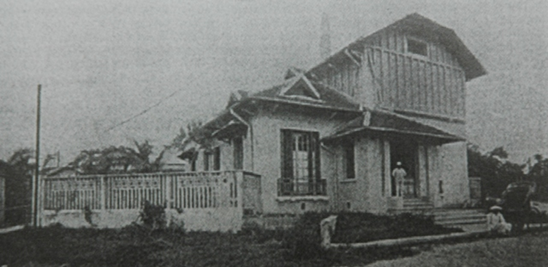
    The Indochina School of Fine Arts before 1945 (looking out toward present-day Le Duan Street, Hanoi)

    In 1944, following the Decree of February 22, 1944, issued by the Governor-General of Indochina, the Architecture Section was elevated to the School of Architecture under the Indochina College of Fine Arts. During this period, an Inter-ministerial decision by the French Government on June 13, 1944, recognized the validity of the school's graduation diplomas for practicing as an architect. This decision marked the merger of the School of Architecture into the École Nationale Supérieure des Beaux-Arts in Paris. On February 6, 1945, the French Government issued a document stipulating that Architecture diplomas from the school in Vietnam, awarded by the French Government, were valid for practice in both France and Indochina.


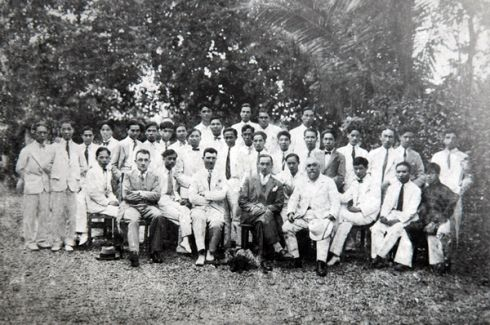
    Lecturers and students of the Indochina School of Fine Arts, 1930s (Documentary photo from the family of Architect Nguyen Van Ninh – collected by Architect Doan Duc Thanh)

  • The road to the University of Architecture Saigon

    The road to the University of Architecture Saigon

    In 1945, the Japanese launched a coup against the French. To avoid the dangers of war, the Governor-General of Indochina issued a decision to move the School of Architecture from Hanoi to Da Lat. Due to the unstable political situation at the time, the school had to suspend operations for a period. On February 1, 1947, the school resumed its activities under the name Da Lat School of Architecture. On March 8, 1948, the French Government’s Inter-ministerial body recognized the school as one of the regional schools of architecture and a branch of the École Nationale Supérieure des Beaux-Arts in Paris.

    In 1945, the Japanese launched a coup against the French. To avoid the dangers of war, the Governor-General of Indochina issued a decision to move the School of Architecture from Hanoi to Da Lat. Due to the unstable political situation at the time, the school had to suspend operations for a period. On February 1, 1947, the school resumed its activities under the name Da Lat School of Architecture. On March 8, 1948, the school was recognized by the French Government’s Inter-ministerial body as one of the regional schools of architecture and a branch of the École Nationale Supérieure des Beaux-Arts in Paris.

    By the end of 1948, the Da Lat School of Architecture was incorporated into the University of Indochina and upgraded to the College of Architecture. According to an announcement by the French Government on September 6, 1948, the Da Lat School of Architecture was no longer a branch of the École Nationale Supérieure des Beaux-Arts in Paris. In 1950, following the cultural treaties signed on December 30, 1949, and May 30, 1950, between Vietnam and France, the University of Indochina was renamed the University of Hanoi. The Da Lat College of Architecture fell under the jurisdiction of the University of Hanoi.

    At the end of 1950, the Da Lat College of Architecture was relocated to Saigon, situated at 196 Pasteur, Saigon, and renamed the Saigon College of Architecture.

    Following the Geneva Accords, the University of Hanoi became the National University of Vietnam, while the University of Saigon was established in the South. The Saigon College of Architecture was under the jurisdiction of the University of Saigon.

    In 1967, according to Decree No. 159/SL/QD of the Government of the Republic of Vietnam signed on October 30, 1967, the Saigon College of Architecture was upgraded to the University of Architecture Saigon, under the University of Saigon.
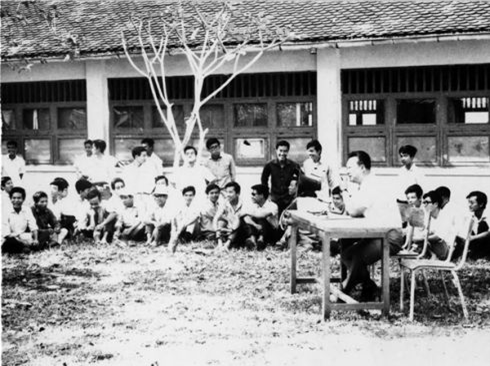
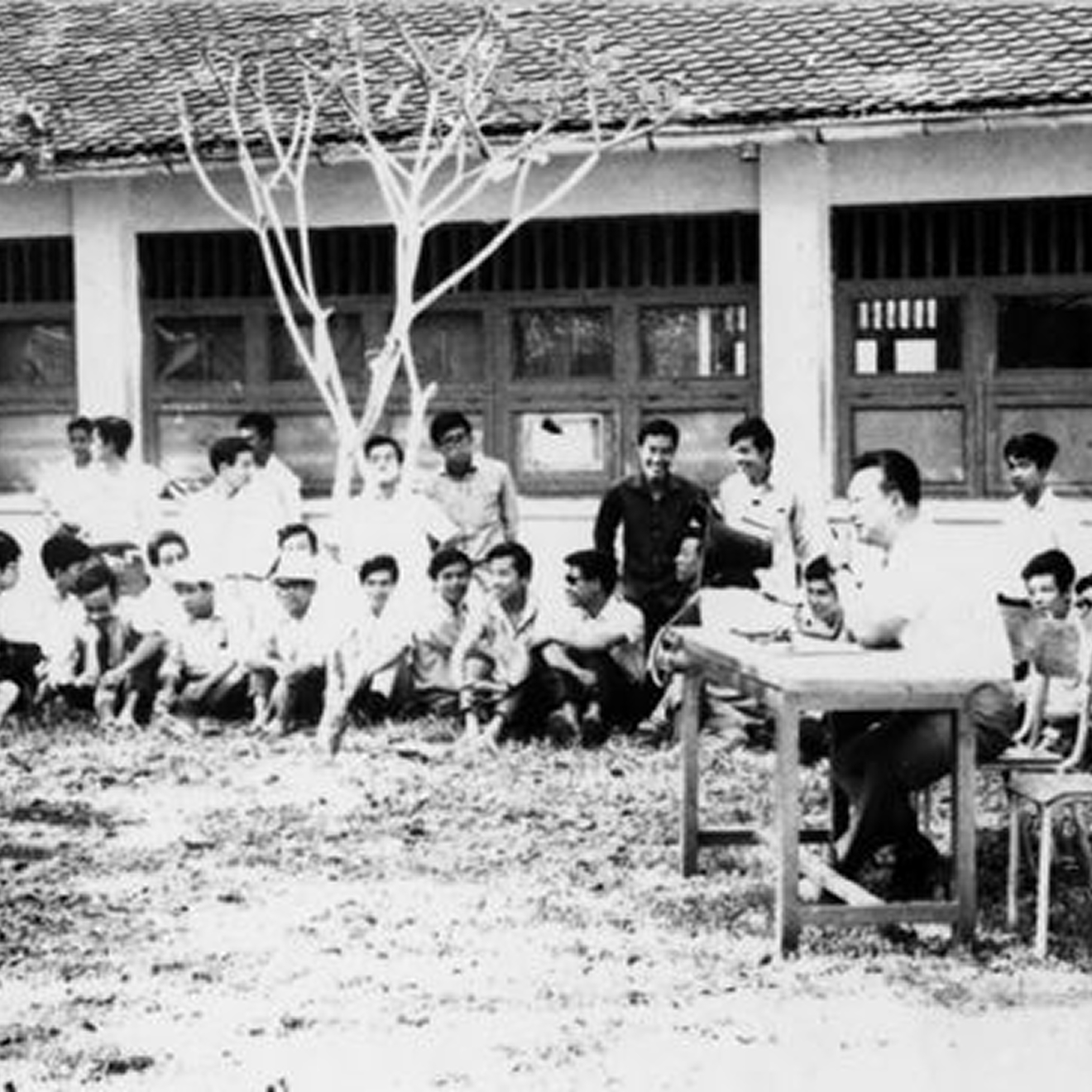
    Professor and Architect of the École Nationale Supérieure des Beaux-Arts, Nguyen Quang Nhac (Dean from 1967-1970), conversing with students

  • University of Architecture Ho Chi Minh City

    University of Architecture Ho Chi Minh City

    On October 27, 1976, according to Decision 426/QD-TTg of the Prime Minister, the University of Architecture Saigon was renamed the University of Architecture Ho Chi Minh City. From 1976 to 1995, the University of Architecture Ho Chi Minh City was under the Ministry of Construction. From 1996 to 2000, the University of Architecture Ho Chi Minh City was a member of the Vietnam National University Ho Chi Minh City. On October 10, 2000, the University of Architecture Ho Chi Minh City was placed under the Ministry of Education and Training. Since 2002, the University of Architecture Ho Chi Minh City has returned to being under the Ministry of Construction.

    In May 1975, the Military Management Committee of Saigon took over the University of Architecture Saigon.

    In November 1975, the Ministry of Higher Education and Professional Secondary Education appointed a management board led by Mr. Truong Tung—Associate Professor, Ph.D., and Architect. The board was responsible for organizing training activities for students currently enrolled and implementing the enrollment and training processes for both the University and College levels of Architecture.

    On October 27, 1976, according to a Decision by the Prime Minister, the University of Architecture Saigon was renamed the University of Architecture Ho Chi Minh City. From 1976 to 1995, the University of Architecture Ho Chi Minh City was under the Ministry of Construction. From 1996 to 2000, the University was a member of the Vietnam National University Ho Chi Minh City. On October 10, 2000, the University of Architecture Ho Chi Minh City was placed under the Ministry of Education and Training. Since 2002, the University of Architecture Ho Chi Minh City has been under the jurisdiction of the Ministry of Construction.

    Through the many ups and downs of history and the changes of time, the former University of Architecture Saigon—now the University of Architecture Ho Chi Minh City—maintains its modest presence at 196 Pasteur, Ward 6, District 3 (formerly), now Xuan Hoa Ward, Ho Chi Minh City. Notably, the bond between generations of students, and between teachers and pupils, continues to be nurtured and passed down with the "patron-negre" or "brotherly" spirit, deeply imbued with the affectionate Southern character known collectively as the "Architecture Spirit."

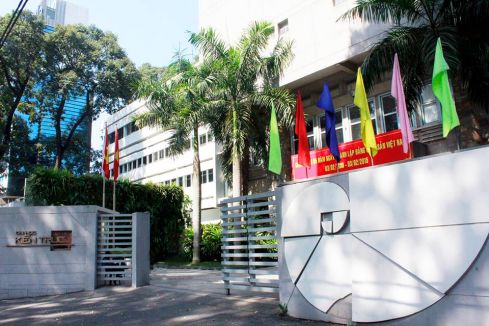
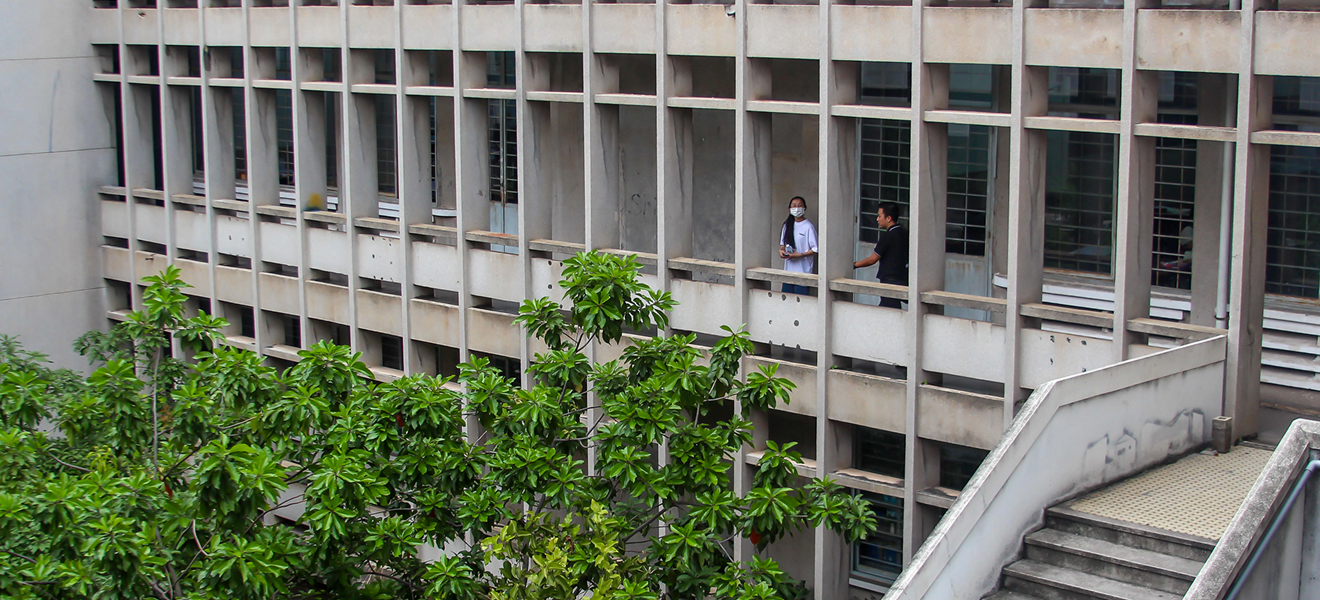
    Although the old campus has changed significantly, the studio building (họa thất) constructed between 1972 and 1973—originally a graduation project by student Truong Van Long under the guidance of the late Prof. Architect Pham Van Thang—still stands. Its washed-stone (đá rửa) facade remains intact, silvered by time as a hallmark of the pioneering Saigon architectural trends of that era. Today, the Studio Building is considered a "washed-stone facade heritage" of old Saigon, a place that preserves the memories of generations of architects from both before and after the Liberation.

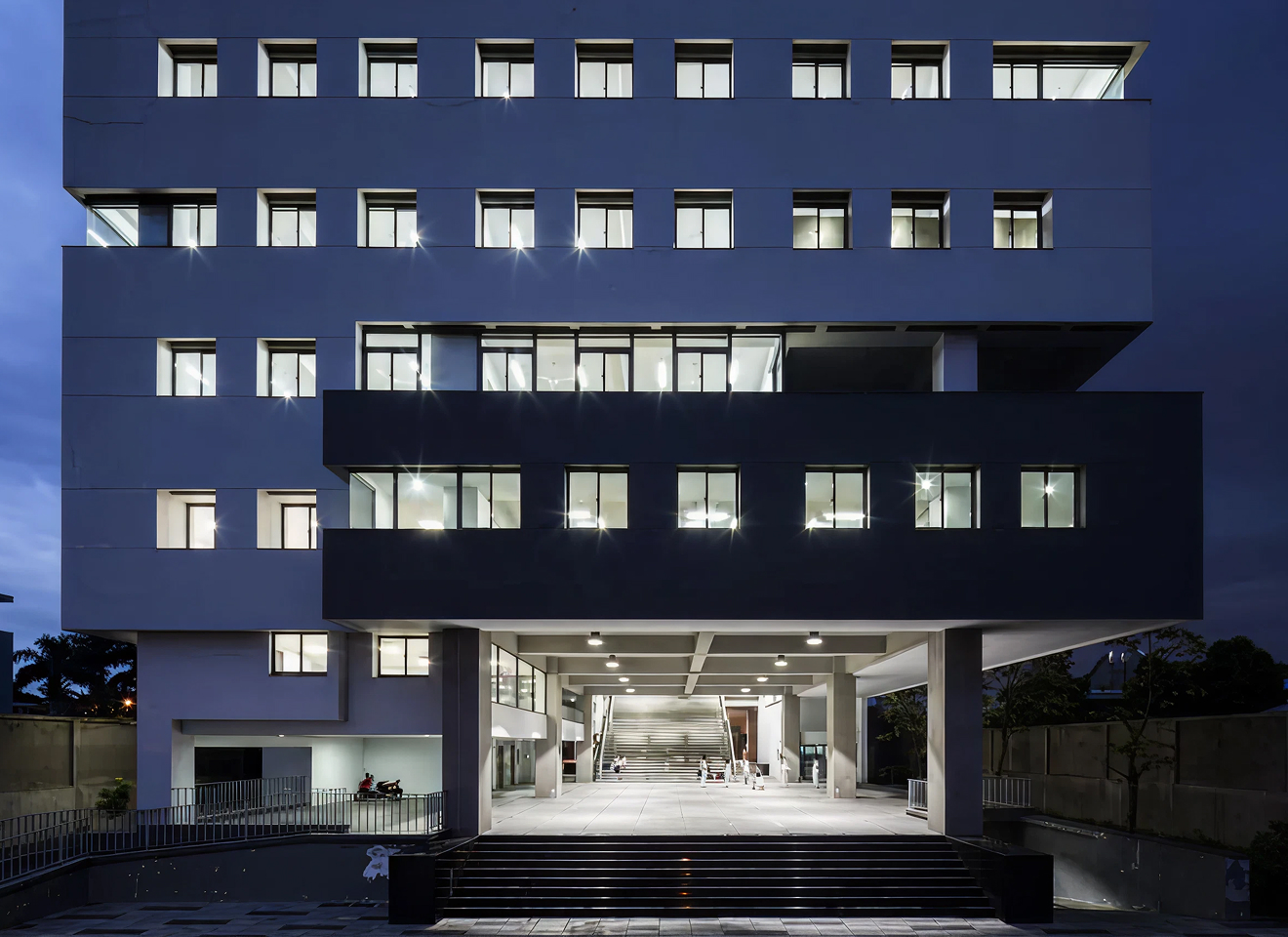
    University of Architecture Ho Chi Minh City at 196 Pasteur, Xuan Hoa Ward, Ho Chi Minh City

  • Historical Imprint - The Aspiration to Become a Tradition

    Historical Imprint - The Aspiration to Become a Tradition

    Many architects actively practiced and held high-ranking positions in the government and social organizations, notably: Architect Nguyen Cao Luyen and Architect Nguyen Nghi, who founded the first architecture class under the Faculty of Civil Engineering at the Hanoi Polytechnic College of Civil Engineering (1956–1961). Architect Nguyen Gia Duc established an architectural group to research and promote "light house" (nhà ánh sáng) designs for the urban poor. Architect Huynh Tan Phat served as the Vice President of the Socialist Republic of Vietnam and Chairman of the Vietnam Association of Architects.

    Reflecting on Generations of Senior Architects

    Based on the records of the late Architect Vo Dinh Diep—Lecturer at the University of Architecture Ho Chi Minh City—and referencing the document "Architectural Training in Vietnam: 50 Years in the Mid-21st Century" by Architect Doan Duc Thanh, published in Architecture Magazine No. 40 (May 2007).

    Over 20 years (1925–1945), the Indochina School of Fine Arts conducted 11 cohorts and granted degrees to 50 architects. Some prominent architects from these classes include: The 1925–1930 class with Nguyen Xuan Phuong and Le Quang Tinh. The 1926–1931 class with Nguyen Van Ninh and Nguyen Tuong Tam (the writer Nhat Linh). The 1927–1932 class with Nguyen Cao Luyen and Hoang Nhu Tiep. The 1928–1933 class with Tran Huu Tiem and Nguyen Gia Duc. The 1929–1934 class with Doan Ngo, Bach Van Chu, and Phan Van Hoa. The 1930–1935 class with Doan Van Minh and Vo Duc Dien. The 1931–1936 class with Huynh Tan Phat and Nguyen Ngoc Diep. The 1932–1937 class with Do Huu Du (Hoang Linh) and Pham Khac He (Pham Hoang). The 1934–1939 class with Nguyen Ngoc Chan, Nguyen Nghi, Ta My Duat, Nguyen Ngoc Ngoan, and Nguyen Ngoc Dien. The 1938–1943 class with Ngo Huy Quynh, Khong Toan, Luong Tan Khoa, and Pham Khac Nhu. The 1940–1945 class included Huynh Soan, Tran Van Duong, and Do Ba Vinh; this final cohort completed their graduation projects and received their degrees in Da Lat.


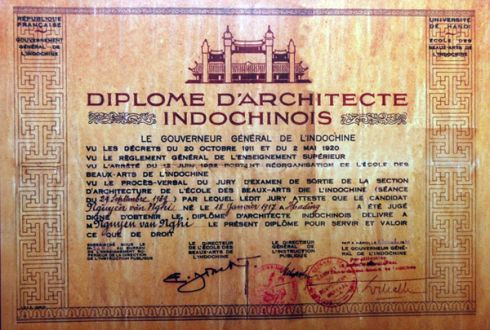
    Architecture Diploma from the Indochina College of Fine Arts

    Many architects actively practiced and held high positions in the government and social organizations, such as: Architect Nguyen Cao Luyen and Architect Nguyen Nghi, who founded the first architecture class under the Faculty of Civil Engineering at the Hanoi Polytechnic College of Civil Engineering (1956–1961). Architect Nguyen Gia Duc established an architectural group to research and promote "light house" designs for the urban poor. Architect Huynh Tan Phat served as the Vice President of the Socialist Republic of Vietnam and Chairman of the Vietnam Association of Architects. Other prominent architects revitalized the Indochina Architecture movement and contributed to pioneering the foundations of Vietnamese architecture.

    There is great pride in these senior generations of architects, particularly those who held key leadership positions at the University throughout its developmental stages, specifically:

    • 1955–1966: Director Tran Van Tai, Architect of the École Nationale Supérieure des Beaux-Arts Paris
    • 1967–1970: Dean Nguyen Quang Nhac, Prof. Architect of the École Nationale Supérieure des Beaux-Arts Paris
    • 1971–1973: Dean Pham Van Thang, Prof. Architect of the École Nationale Supérieure des Beaux-Arts Paris
    • 1974–1975: Dean To Cong Van, Prof. Architect of the École Nationale Supérieure des Beaux-Arts Paris
    • 1976–1978: Assoc. Prof. Ph.D. Architect Truong Tung – Rector of the University of Architecture Ho Chi Minh City
    • 1979–1995: Prof. Eng. Mai Ha San – Rector of the University of Architecture Ho Chi Minh City
    • 1995–2005: Ph.D. Architect Hoang Nhu Tan – Rector of the University of Architecture Ho Chi Minh City
    • 2005–2015: Assoc. Prof. Ph.D. Architect Pham Tu – Rector of the University of Architecture Ho Chi Minh City
    • 2015–2025: Assoc. Prof. Ph.D. Architect Le Van Thuong – Rector of the University of Architecture Ho Chi Minh City
    • From August 2025 to present: Assoc. Prof. Ph.D. Architect Pham Trong Thuat – Rector of the University of Architecture Ho Chi Minh City
  • Historical Imprint - The Aspiration to Become a Tradition

    Historical Imprint - The Aspiration to Become a Tradition

    Huynh Kim Chuong, former Director of the General Institute of Design and Planning - Ministry of Construction, stated that on the morning of May 1, 1975, the military unit of the Central Office for South Vietnam’s Construction Board under his charge—designated as K7 and consisting of over 300 "militarized" cadres and workers—marched directly into the University of Architecture Saigon. The University of Architecture Saigon was temporarily requisitioned as the headquarters for the K7 delegation. Here, K7 organized the architecture students into an organization called the "Architecture Students' Revolutionary Committee," comprising more than 500 members. These members volunteered to eat at home while performing revolutionary work; every day, they used their motorcycles and motorbikes to transport the K7 troops to participate in activities as directed by the City Military Management Committee.

    The Transition Between Two Regimes

    According to Architect Co Van Hau, on the morning of May 1, 1975, almost all the school's staff, including the Board of Directors, professors, and teachers, were present to "report" at the School, specifically: Dean Prof. Architect Nguyen Quang Nhac, Assoc. Prof. Architect To Cong Van, Architect Pham Van Thong, Architect Tran Phi Hung, Architect Do Ba Vinh, Architect Vo Dinh Diep, Architect Co Van Hau, Architect Tran Phong Lieu, Architect Nguyen Trong Kha, Architect Ho Thieu Tri, Architect Nguyen Tan Cang, Architect Dinh Huu Tuong, Prof. Engineer Pham Minh Canh, Prof. Engineer Pham Minh Tri, and others. The general atmosphere of the entire school at that time was one of hesitation and anxiety regarding a life full of upheavals.

    Huynh Kim Chuong, former Director of the General Institute of Design and Planning - Ministry of Construction, stated that on the morning of May 1, 1975, the military unit of the Central Office for South Vietnam’s Construction Board under his charge—designated as K7 and consisting of over 300 "militarized" cadres and workers—marched directly into the University of Architecture Saigon. The University of Architecture Saigon was temporarily requisitioned as the headquarters for the K7 delegation. Here, K7 organized the architecture students into an organization called the "Architecture Students' Revolutionary Committee," comprising more than 500 members. These members volunteered to eat at home while performing revolutionary work; every day, they used their motorcycles and motorbikes to transport the K7 troops to participate in activities as directed by the City Military Management Committee.

    Thus, it can be said that after the Liberation, the University of Architecture Ho Chi Minh City was one of the few universities in Saigon at that time that did not "evacuate at will." Instead, both teachers and students kept pace with the new life, participated in revolutionary movement activities, and soon stabilized the organization of training activities.

  • Respecting the Past and Pride in the Present

    Respecting the Past and Pride in the Present

    University of Architecture Ho Chi Minh City today is a center for undergraduate and postgraduate training, research, application, and the transfer of science and technology. It provides high-quality human resources meeting national and regional standards in the following fields: Architecture, Planning, Construction, Applied Arts, Infrastructure Engineering, and Urban Fine Arts to meet social demands.

    With 50 years of formation and development, continuing a 100-year tradition of architectural training, the University of Architecture Ho Chi Minh City today is a multi-disciplinary institution, ready for growth and integration as stated in its mission: "The University of Architecture Ho Chi Minh City today is a center for undergraduate and postgraduate training, research, application, and the transfer of science and technology, providing high-quality human resources meeting national and regional standards in the following fields: Architecture, Planning, Construction, Applied Arts, Infrastructure Engineering, and Urban Fine Arts to meet social demands and national development."

    Respecting the past and taking pride in the school

    named the University of Architecture Ho Chi Minh City

Mission

University of Architecture Ho Chi Minh City provides high-quality human resources through research and application-oriented training, meeting social demands and international integration in the fields of Planning - Architecture, Construction, and Applied Arts.

Mission

Vision

By 2030, the University of Architecture Ho Chi Minh City aims to be one of the leading universities in the region and the world.

Vision

Core values

Tradition

Tradition

Creative

Creative

Professional

Professional

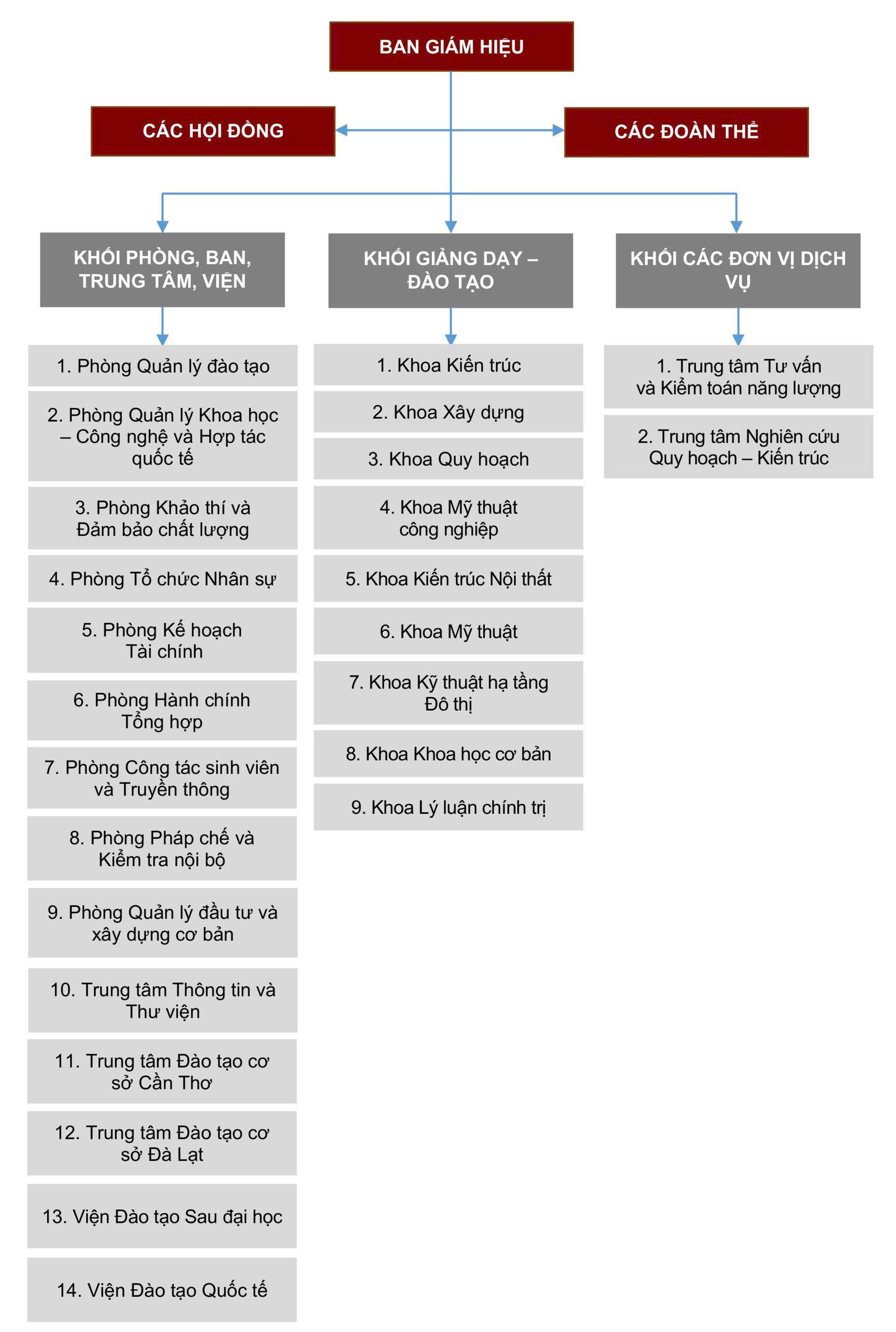
Organizational Structure

Organizational Structure

(028) 38.222748